
Introduction to Cloud Computing Solutions
In the rapidly evolving digital era, cloud computing solutions have become a cornerstone of innovation, efficiency, and scalability for businesses. As organizations move away from traditional on-premises infrastructure, cloud services offer unparalleled flexibility, cost savings, and performance enhancements. From infrastructure-as-a-service (IaaS) to platform-as-a-service (PaaS) and software-as-a-service (SaaS), cloud computing empowers enterprises to build, deploy, and manage applications more efficiently.
Types of Cloud Computing Services
1. Infrastructure as a Service (IaaS)
IaaS provides fundamental computing resources such as virtual machines, storage, and networks on a pay-as-you-go basis. It is ideal for businesses that want control over their IT infrastructure without managing physical hardware.
- Key Providers: Amazon Web Services (AWS), Microsoft Azure, Google Cloud Platform (GCP)
- Use Cases: Data backup, disaster recovery, web hosting, big data analytics
2. Platform as a Service (PaaS)
PaaS offers a complete development and deployment environment in the cloud. It allows developers to focus solely on coding without worrying about infrastructure, OS updates, or storage.
- Benefits: Faster time-to-market, reduced coding time, simplified development lifecycle
- Examples: Heroku, Google App Engine, Microsoft Azure App Services
3. Software as a Service (SaaS)
SaaS delivers software applications over the internet, eliminating the need for installations and maintenance. It provides scalability, automatic updates, and accessibility from any device.
- Popular SaaS Platforms: Salesforce, Dropbox, Microsoft 365, Google Workspace
- Applications: CRM, collaboration tools, email marketing, project management
Key Advantages of Cloud Computing Solutions
Scalability and Flexibility
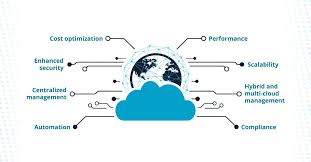
Cloud solutions offer on-demand scalability, allowing businesses to expand or shrink resources as required. Whether handling peak traffic during sales or scaling down during off-seasons, cloud platforms adjust seamlessly.
Cost-Effectiveness
The pay-as-you-go pricing model significantly reduces capital expenditure. Businesses can avoid upfront hardware investments and only pay for what they use, leading to substantial cost savings.
Enhanced Collaboration
With cloud-based tools, teams can collaborate in real-time, access shared documents, and streamline workflows from any location. This is especially critical for remote or hybrid work environments.
Robust Security Measures
Top cloud providers implement multi-layered security protocols, including data encryption, identity access management, and regular compliance audits to protect sensitive data and ensure privacy.
Disaster Recovery and Backup
Cloud solutions offer automated backups and robust disaster recovery capabilities, reducing downtime and ensuring business continuity in case of data loss or cyber incidents.
Top Cloud Computing Providers in the Market
Amazon Web Services (AWS)
AWS remains the market leader in cloud computing, offering over 200 fully featured services from global data centers. Its scalability, reliability, and vast ecosystem make it suitable for startups to large enterprises.
- Features: EC2, S3, Lambda, RDS
- Industries Served: Finance, healthcare, education, gaming
Microsoft Azure
Azure provides a comprehensive cloud platform with seamless integration with Microsoft tools. It supports hybrid cloud environments and offers strong enterprise-level support.
- Popular Services: Azure Virtual Machines, Azure DevOps, AI + Machine Learning
- Advantages: Hybrid capabilities, integrated development tools
Google Cloud Platform (GCP)
Known for its data and AI capabilities, GCP provides intelligent analytics and machine learning tools. It is a go-to choice for organizations focused on data science and real-time processing.
- Strengths: BigQuery, TensorFlow, Kubernetes Engine
- Use Cases: IoT, AI-driven applications, real-time analytics
Industry-Specific Applications of Cloud Solutions
Healthcare
Cloud computing helps healthcare providers securely store and manage patient records, enable telemedicine, and perform advanced analytics for predictive diagnosis and treatment planning.
Finance
Financial institutions use cloud platforms for fraud detection, real-time transaction monitoring, and regulatory compliance. Cloud solutions also enhance mobile banking and digital payment systems.
Retail and E-Commerce
Retailers leverage cloud computing to enhance customer experience, manage inventories, analyze consumer behavior, and personalize marketing strategies.
Education
Educational institutions adopt cloud platforms to provide online learning environments, facilitate collaboration between students and educators, and manage large datasets effectively.
Hybrid and Multi-Cloud Strategies
A growing number of organizations are adopting hybrid and multi-cloud architectures to avoid vendor lock-in and enhance redundancy. These strategies allow businesses to leverage the strengths of multiple cloud providers while maintaining sensitive data on-premises if needed.
- Hybrid Cloud: Combines on-premises infrastructure with public or private clouds.
- Multi-Cloud: Utilizes services from multiple cloud providers for different workloads.
Challenges in Cloud Computing and How to Overcome Them
Data Security and Privacy
Despite advanced measures, security remains a top concern. Businesses must implement best practices such as zero-trust policies, end-to-end encryption, and multi-factor authentication to safeguard data.
Compliance and Legal Issues
Industries like finance and healthcare face strict compliance regulations. Partnering with cloud providers that offer regulatory-compliant solutions is crucial for adhering to standards like GDPR, HIPAA, and PCI-DSS.
Latency and Performance
Applications requiring low latency may face performance issues. Choosing cloud regions close to end-users and using content delivery networks (CDNs) can help minimize latency.
Future of Cloud Computing Solutions
The future of cloud computing is anchored in edge computing, AI integration, and quantum computing. As businesses demand faster processing and intelligent automation, cloud platforms are evolving to deliver next-generation technologies that drive innovation and operational excellence.
- Edge Computing: Processing data closer to the source to reduce latency.
- AI & ML Services: Offering predictive analytics, natural language processing, and automation.
- Quantum Cloud: Providing access to quantum computers via the cloud for complex problem-solving.
Conclusion
Cloud computing solutions have transformed how businesses operate, innovate, and compete. By leveraging the cloud, organizations can achieve greater agility, cost savings, and technological advancement. Whether you’re a startup or a Fortune 500 company, integrating cloud services into your strategy is essential for digital transformation and future readiness.